
What Is Waste-to-Energy (WTE)? A Comprehensive Guide
Every organization produces waste. The real question is what happens next.
For many organizations, the default answer has been landfill. It’s simple, familiar, and often treated as the baseline option. But it’s also a long-term commitment to land use, emissions, and ongoing management. As sustainability expectations rise and landfill capacity tightens, that default is starting to break.
For municipal leaders, sustainability teams, facility managers, and commercial or industrial businesses, there’s an opportunity to build an alternate system—one that reduces waste where possible, recovers value where practical, and avoids treating landfill as the only fallback.
In this guide, you’ll learn about one option, waste-to-energy (WTE), and how it connects to broader sustainability and operational goals.
What Is Waste-to-Energy?
WTE is the process of converting nonrecyclable waste into usable energy, most often electricity and steam. It’s a way to recover value from materials that have reached the end of their useful life and are not practical candidates for reuse or recycling.
Waste-to-energy is often misunderstood as simply another disposal method. In reality, it sits between recycling and landfill in the waste management hierarchy. The goal is not to replace recycling or reduction efforts but to manage what remains after those higher-value options have been pursued. Michael Van Brunt, Vice President of Environmental and Sustainability at Reworld®, thinks of it this way: “How can we best capture any remaining value from materials that would otherwise go into a landfill?”
In a modern system, WTE helps communities and organizations reduce landfill dependence, recover energy, and support a circular economy strategy.
What Are Waste-to-Energy Plants?
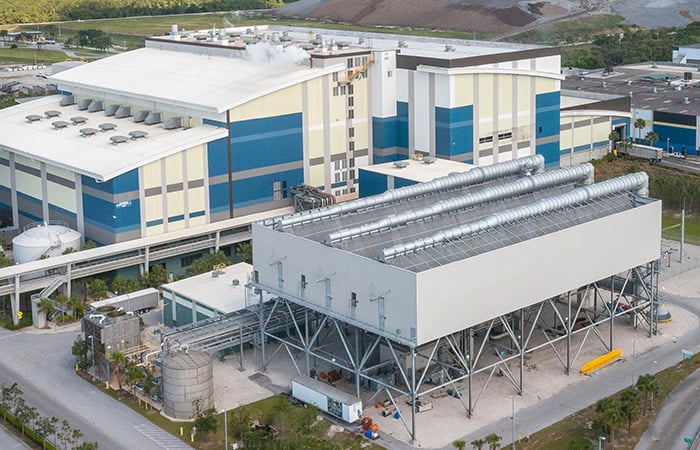
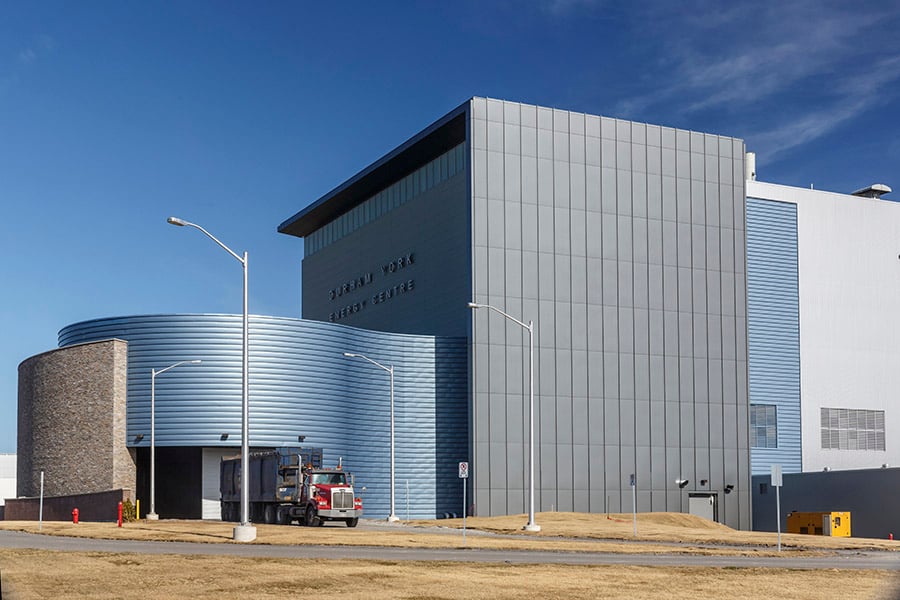
Waste-to-energy plants, also known as thermomechanical treatment facilities (TTFs), are specialized facilities that process residual waste and recover energy from it. In the United States, the most common form is a mass burn facility that accepts municipal solid waste and uses combustion to generate steam and electricity.
These plants are part waste management infrastructure and part energy infrastructure. That dual role is important: They are built to solve a waste problem first and recover energy as a valuable output of the process.
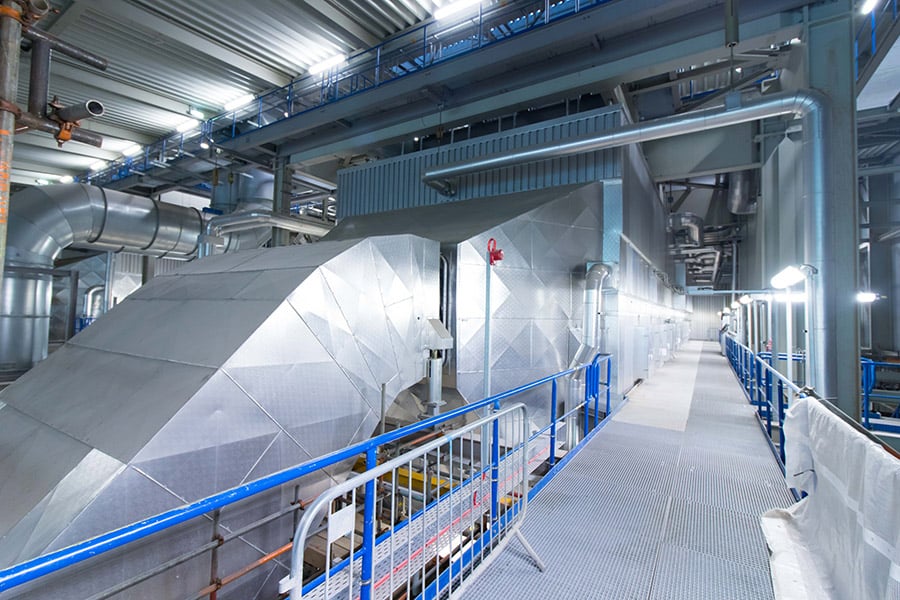
Inside a typical plant, you will find receiving areas, tipping floors, waste storage bunkers, crane systems, boilers, turbines, air pollution control equipment, metal recovery systems, and continuous emissions monitoring equipment. Each part of the facility has a job. Some systems handle logistics and fuel preparation, while others drive combustion and energy recovery or focus on emissions management and materials recovery.
A modern TTF or WTE plant is designed to operate around the clock. That constant operation helps communities manage daily waste generation while also creating a more predictable energy output.
How Does Waste-to-Energy Work?
At a high level, waste-to-energy is a continuous, tightly controlled process that moves material through several distinct phases. Each phase has a specific role, from receiving and preparing the waste to recovering energy and controlling emissions. What looks simple from the outside is actually a coordinated system of mechanical, thermal, and chemical processes working together to extract as much value as possible from residual materials.
Let’s take a closer look at how the WTE process works at a Reworld® thermomechanical treatment facility.
Phase 1: Waste Delivery and Initial Inspection
The process begins when collection trucks or transfer vehicles arrive at the facility. Loads are weighed and directed to a tipping floor, where waste is unloaded.
This moment is the first control point. Operators visually inspect incoming material to identify items that do not belong in the system, such as oversized objects, restricted materials, or items that could interfere with operations. Catching problems here prevents downstream issues in combustion and emissions control.
Phase 2: Waste Storage, Mixing, and Fuel Preparation
After inspection, the waste is pushed into a storage bunker or pit. This area acts as a short-term fuel reservoir, allowing the facility to operate continuously even when waste deliveries fluctuate.
Overhead grapple cranes play a critical role in this phase. Operators use them to lift, blend, and reposition the waste.
The goal is to create a more consistent fuel profile by balancing moisture levels and material composition. “You’re trying to mix all of that together so we can make as consistent a mix going into the boiler as we possibly can,” Van Brunt describes. Wet loads from rain events, for example, can be mixed with drier waste to stabilize combustion conditions.
Phase 3: Feeding the Combustion System
Once prepared, the waste is transferred into a feed chute or hopper. Hydraulic rams push the material onto a combustion grate inside the boiler. The grate is typically inclined and designed to move the waste slowly through the system.
As the material travels, it is agitated and exposed to controlled airflow from below. This combination of movement and air distribution supports stable combustion and thorough burnout of the waste.
Phase 4: Combustion and Thermal Energy Release
Inside the boiler, the waste undergoes controlled combustion at high temperatures. This phase is where the chemical energy stored in the waste is released as heat.
Modern systems are designed around the principles of time, temperature, and turbulence. High temperatures help break down complex compounds, and sufficient residence time allows reactions to complete. Turbulence, created by air injection and grate movement, promotes mixing so that combustion occurs evenly.
This process is not an open burn. It’s a managed thermal process engineered to maximize energy recovery while preparing flue gases for downstream treatment.
Phase 5: Heat Recovery and Steam Generation
Surrounding the combustion chamber are water wall tubes filled with water. As heat is released, it transfers into these tubes, converting water into steam.
That steam is then collected and further conditioned. It may be pressurized and superheated before being routed to a turbine generator to produce electricity. In some applications, steam is delivered directly to industrial users for process heat.
This phase is where waste transitions from a disposal problem into an energy resource.
Phase 6: Air Pollution Control and Emissions Treatment
After heat recovery, flue gases move through a series of air pollution control systems, one of the most engineered parts of the facility.
Depending on design, the system may include:
- Ammonia or urea injection to reduce nitrogen oxides
- Activated carbon to capture mercury and trace organics
- Scrubbers that neutralize acid gases using lime or similar reagents
- Baghouses that filter fine particulate matter using fabric filters and filter cake
Each part targets a different class of emissions. Together, they create a layered defense that removes contaminants before gases are released.
Additionally, continuous emissions monitoring systems track key indicators such as carbon monoxide, nitrogen oxides, sulfur dioxide, and opacity. Routine stack testing verifies overall system performance and establishes operating parameters.
Phase 7: Ash Handling and Metals Recovery
After combustion, the remaining material is primarily ash, which still contains recoverable metals. Reworld® facilities use magnets to extract ferrous metals such as steel and eddy current systems to separate nonferrous metals like aluminum, copper, and brass, which can be sent back into manufacturing streams, adding another layer of resource recovery.
The remaining ash is managed according to regulatory requirements.
Phase 8: Energy Export and System Integration
The final phase is energy delivery. Electricity generated by the turbine is sent to the grid. Steam, where applicable, is delivered to nearby industrial users.
At this point, the facility has completed a full cycle: receiving waste, recovering energy, controlling emissions, and reclaiming materials.
How Is Waste Converted to Energy?
Waste is converted to energy by unlocking the heat value stored in combustible materials such as paper, cardboard, certain plastics, wood, textiles, and other residual components of the municipal solid waste stream. When those materials move through a controlled combustion system, they release heat. That heat is captured by boiler tubes and used to create steam. The steam can then do useful work: It may spin a turbine to generate electricity or be delivered directly as thermal energy to industrial users.
It’s one reason waste-to-energy and TTFs are often discussed as both waste solutions and energy solutions. They address a disposal challenge while recovering a useful output from materials that still contain embedded energy.
The conversion process also supports secondary recovery opportunities. Metals can be extracted from ash after combustion. In some systems and markets, recovered heat can support district energy or industrial operations. In others, renewable energy credits can add market value to the energy produced.
That combination of waste management, energy generation, and resource recovery is what gives WTE its strategic role in a more integrated materials management system.
What Waste Streams Are Suitable for Waste-to-Energy?
Waste-to-energy is best suited for residual waste streams that are no longer practical to reduce, reuse, or recycle. That usually includes mixed municipal solid waste and selected commercial and industrial waste streams that contain enough combustible material to support energy recovery.
Examples may include the following:
- Post-collection residential waste that remains after recycling programs
- Commercial waste from offices, retail, hospitality, and institutions
- Nonhazardous industrial waste streams that fit facility acceptance criteria
- Paper and packaging rejects from recycling operations
- Certain bulky combustible materials that can be processed appropriately
- Residual waste from manufacturing or distribution environments
Not every material is a good fit. TTFs are not a catch-all for anything and everything. Loads must meet facility, regulatory, and operational requirements, and highly recyclable materials should be recovered upstream whenever possible. Hazardous waste, restricted materials, and certain oversized or problematic items may require different treatment pathways.
The strongest programs separate what can be recycled, composted, or otherwise recovered first. Waste-to-energy becomes the solution for what remains.
What Are Some Waste-to-Energy Examples?
Waste-to-energy shows up in several forms depending on the waste stream, technology, and end use of the energy.
One common example is municipal solid waste combustion, where residual trash is processed at a facility that generates electricity for the grid. Many people think of this model first.
Another example is steam supply for industrial operations. In some markets, thermomechanical treatment facilities provide steam directly to nearby manufacturers, which can create a tight link between waste management and industrial production. Others include anaerobic digestion for source separated organics, landfill gas recovery, or advanced thermal systems designed for specific feedstocks.
The right fit depends on the material stream, local infrastructure, economics, and policy environment.
What Are the Benefits of Waste-to-Energy?
Waste-to-energy offers a variety of benefits across multiple dimensions when it is applied to the right portion of the waste stream. It is not a replacement for upstream efforts like reduction or recycling but serves as a strategic solution for what remains.
Reducing Dependence on Landfills
One of the most immediate benefits of TTFs employing WTE technology is reducing reliance on landfill disposal. Landfills require long-term land use, ongoing monitoring, and infrastructure that must be maintained indefinitely. As capacity tightens and transportation distances increase, landfill dependence becomes both a logistical and financial challenge.
Waste-to-energy provides an alternative pathway for residual waste, helping communities and businesses avoid overreliance on a single disposal method.
Recovering Energy from Residual Waste
Residual waste still contains embedded energy. Materials like paper, wood, and certain plastics have calorific value that can be converted into usable power. Instead of burying that value, waste-to-energy captures it and converts it into electricity or steam, transforming waste from a cost center into a resource that contributes to energy production.
Supporting Greenhouse Gas Reduction Strategies
When compared with landfilling residual waste, TTFs that use waste-to-energy technology can support greenhouse gas reduction efforts, particularly in relation to methane.
Landfills generate methane as organic materials decompose, and unfortunately, methane has a significantly higher short-term warming impact than carbon dioxide. By diverting waste from landfill and processing it through controlled energy recovery, organizations can reduce exposure to methane related emissions.
The impact becomes even more meaningful when evaluated at scale across municipal or regional waste systems.
Enabling Additional Resource Recovery
Thermomechanical treatment facilities do not stop at energy production. Facilities can recover metals from the ash after combustion. Ferrous metals such as steel are extracted using magnets, while nonferrous metals like aluminum and copper are separated using eddy current systems. These materials can then reenter manufacturing supply chains, adding another layer of circularity by reclaiming resources that would otherwise be lost in landfill disposal.
Strengthening Local Infrastructure and Reliability
Communities and businesses need reliable solutions for managing residual waste. Waste-to-energy facilities operate continuously and provide consistent processing capacity. At the same time, they generate energy close to where waste is produced, which creates a more localized and resilient system compared to long haul disposal models that depend heavily on transportation and distant landfill sites.
Supporting Zero Waste-to-Landfill Goals
Many organizations are working toward zero waste-to-landfill targets. However, achieving those goals requires more than just recycling programs. TTFs using waste-to-energy provide a viable pathway for materials that cannot be recycled or composted. They allow organizations to divert residual waste from landfill while still extracting value from it. And when integrated with reduction and recycling efforts, WTE becomes a key component of a more complete and credible waste strategy.
What Is the Environmental Impact of Waste-to-Energy?
The environmental impact of waste-to-energy must be evaluated in context.
Any system that manages waste at scale has an environmental footprint. The serious comparison is not between TTFs employing waste-to-energy and some fantasy world where no waste exists but between waste-to-energy and the real alternatives available for residual waste.
From that perspective, the most common benchmark is landfill disposal. When waste is treated via WTE, it does not end up in landfills, where decomposition can generate methane and create long term monitoring and land use burdens. It also reduces waste volume significantly and can recover metals after processing.
That said, waste-to-energy facilities do generate emissions and must manage them carefully. It’s where plant design, operating discipline, emissions controls, monitoring, and regulatory compliance make a difference. Modern facilities use layered air pollution control systems and are subject to permit conditions and testing requirements.
Waste-to-energy is not impact-free, but it compares favorably to landfill, transport-intensive disposal, or unmanaged waste. The real environmental question is which option creates the better outcome for the specific waste stream in front of you.
What Are Renewable Energy Certificates (RECs)?
Renewable energy certificates, or RECs, are market-based instruments that represent the environmental attributes associated with one megawatt-hour (MWh) of renewable electricity generation.
In simple terms, a REC exists alongside the electricity itself. The electricity flows into the grid as a commodity, and the REC represents the renewable value tied to that generation. It can be bought or sold separately depending on the rules of the market.
RECs are important because electricity on the grid is blended. Once power enters the system, it’s not practical to trace every electron from one generator to one user in a literal physical sense. RECs create an accounting mechanism that allows buyers to support renewable generation and document that support.
How Can Businesses Leverage RECs from Waste-to-Energy Plants?
Businesses can use RECs from eligible waste-to-energy generation to support renewable energy and greenhouse gas goals, depending on market rules and reporting frameworks.
For some organizations, RECs can help demonstrate progress toward voluntary sustainability commitments. For others, they may play a role in procurement strategies tied to renewable energy targets. In regulated markets, they may also connect to state-level clean energy requirements or utility procurement structures.
The key point is that RECs create a bridge between waste management and energy strategy. A business now reviews where its residual waste goes as well as whether that management pathway creates measurable environmental attributes tied to energy recovery.
That said, companies need to think clearly. Buying RECs without fixing obvious waste issues upstream is cosmetic. A credible program starts with waste reduction, better segregation, recycling optimization, and clear accountability for residuals. Then, RECs can add another layer of value to a smarter overall system.
What Policies, Regulations, and Incentives Support Waste-to-Energy?
The policy landscape for waste-to-energy is shaped by a mix of federal, state, and international frameworks.
In the United States, facilities using WTE technology operate within a strict environmental permitting structure that includes air emissions limits, operating requirements, monitoring, and testing obligations. Federal and state agencies set the regulatory framework, while individual permits define facility-specific requirements.
At the state level, renewable portfolio standards (RPSs) can play a major role. In markets where waste-to-energy qualifies in whole or in part, those programs may support REC generation and provide economic value tied to renewable electricity production.
Other policy tools can influence the economics indirectly. Landfill taxes, disposal surcharges, recycling mandates, organics diversion rules, and broader sustainable materials management policies all affect whether communities invest in landfill first or build more balanced infrastructure.
Globally, one of the clearest policy lessons comes from countries that have made landfill the least attractive option through taxes, restrictions, or bans on specific materials. When that happens, the market has stronger reasons to invest in alternatives such as recycling, composting, anaerobic digestion, and energy recovery.
Are There Any Real-World Examples of Waste-to-Energy Success?
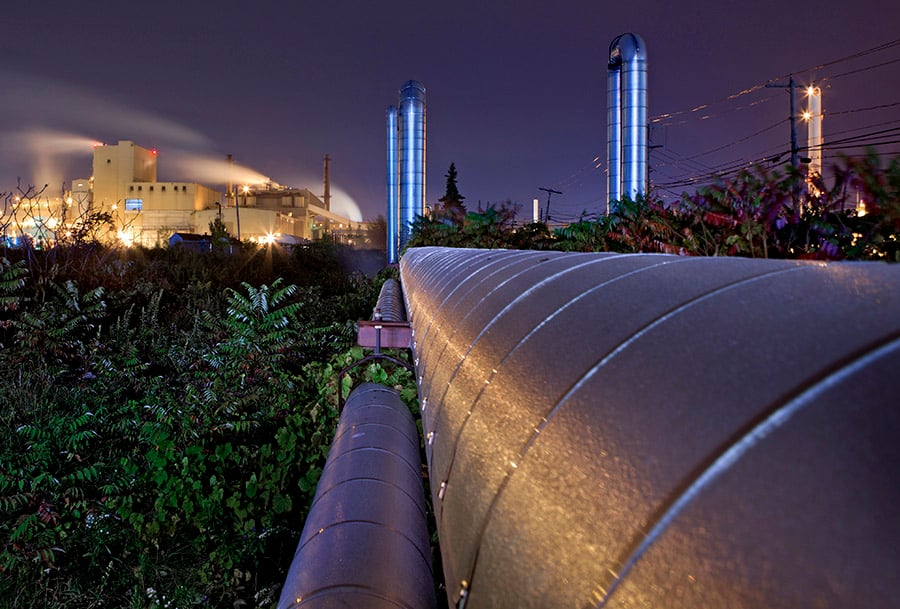
In Niagara Falls, New York, companies from a variety of industries work with Reworld® to reduce their waste generation and turn what waste is unavoidable into new products, low-carbon fuels, and carbon-negative energy. These companies send their waste to the TTF where it is converted into energy.
Managing several thousand tons of waste per day, Reworld® is able to significantly reduce these partners’ carbon footprints and supply ample resources to their manufacturing processes. Steam from the facility helps power several nearby industrial sites, including Greenpac Mills, a leading producer of recycled paper products. This symbiotic process is a leading example of a circular economy in action.
What Are the Disadvantages of Waste-to-Energy?
Waste-to-energy is not a perfect solution, and treating it like one weakens both the strategy and the credibility behind it. Like any infrastructure system, it comes with trade-offs that need to be understood and managed.
High Capital Investment and Long Development Timelines
Building a modern TTF or waste-to-energy facility requires significant upfront investment. These are complex projects that involve engineering, permitting, financing, construction, and long-term operational planning.
Development timelines can stretch over several years due to regulatory reviews, community engagement, and technical design requirements. This reality makes waste-to-energy a long-term infrastructure decision rather than a quick operational fix.
For organizations looking for immediate changes, these delays can feel like barriers, which is why it often makes the most sense to look for an existing waste management partner to carry the logistical burden.
Public Perception and Community Acceptance
One of the most persistent challenges is perception. Many people still associate WTE with outdated incineration models or uncontrolled emissions. Even when modern facilities operate with advanced controls and strict regulatory oversight, public understanding often lags behind the reality, which can lead to opposition, delays, or increased scrutiny during project development. In some cases, perception becomes a bigger obstacle than the technical or environmental performance of the facility itself.
Variability of Waste Streams
Waste is not a uniform fuel source. It is highly variable in composition, moisture content, and energy value.
This variability creates operational complexity. Facilities must be designed to handle fluctuations in feedstock while maintaining stable combustion and emissions performance. It also limits the effectiveness of certain advanced WTE technologies that perform better with more consistent inputs. Mixed waste makes precision more difficult, which can impact efficiency and scalability depending on the system.
Policy and Market Inconsistency
Waste-to-energy does not operate in a vacuum; its viability is heavily influenced by policy and market conditions. In regions where landfill disposal remains inexpensive and widely available, it becomes harder for alternative solutions to compete. Without clear incentives, infrastructure planning, or long-term policy direction, investment in WTE can be more difficult to justify, which creates uneven adoption across different regions, even when the underlying need is similar.
Risk of Misaligned Waste Strategies
WTE can be misapplied when it is used as a shortcut instead of part of a broader system. If organizations rely on it without first improving waste reduction, segregation, and recycling, they risk sending recoverable materials into energy recovery unnecessarily, undermining both environmental performance and overall efficiency.
The strongest waste strategies treat waste-to-energy as a downstream solution for residuals, not a replacement for upstream improvements.
What Are Common Myths and Misconceptions About Waste-to-Energy?
Misunderstanding waste-to-energy usually comes from looking at it in isolation or comparing it to the wrong baseline. As a result, there is a set of persistent myths that sound convincing but don’t hold up when you examine how modern systems actually operate.
The way to move past these myths is to focus on system design. Identify what can be reduced, what can be recovered, and what remains. Then match each stream to the solution that delivers the best outcome.
Myth: Waste-to-Energy Discourages Recycling
This concern stems from the idea that if waste can be turned into energy, valuable materials will be pulled away from recycling programs. In practice, the opposite is true—at least, in well-designed systems. Waste-to-energy sits after reducing, reusing, and recycling, not ahead of them. Facilities are built to handle residuals that remain once higher-value recovery has already happened. As recycling improves, the material sent to TTFs using WTE technology becomes more refined, not more wasteful.
Myth: Europe’s Technology Is Better
High adoption rates in Europe are often attributed to superior technology. In reality, the core systems and environmental standards in North America are largely comparable.
The bigger difference is policy. Countries that make landfill the least attractive option through taxes, restrictions, or bans create conditions where recycling, composting, and energy recovery become more viable. When the economics shift, the system evolves.
Myth: Waste-to-Energy Is Just Incineration
The phrase “burning waste” creates an image of uncontrolled combustion with minimal oversight. Modern waste-to-energy facilities operate nothing like that. They are engineered systems with controlled combustion, managed airflow, and multiple layers of emissions treatment. Technologies such as reagent injection, scrubbers, activated carbon, and baghouse filtration are standard. Continuous monitoring and strict permit requirements add another layer of accountability. The process is designed around control and verification.
Myth: Waste-to-Energy Is Highly Polluting
Any process involving combustion raises concerns about emissions. The key issue is not whether emissions exist but how they are managed and how the system compares to real alternatives. Modern facilities use advanced control systems and operate within defined limits under regulatory oversight.
Myth: Waste-to-Energy Only Destroys Value
It’s easy to assume that once waste enters a facility, all remaining value is lost. In reality, waste-to-energy recovers value in multiple ways. It converts embedded energy into electricity or steam and continues recovery after combustion by extracting metals from ash. Instead of burying materials and losing their remaining potential, the process captures both energy and resources that can be returned to productive use.
Myth: Waste-to-Energy Competes with the Circular Economy
This misconception assumes that converting waste to energy works against circularity because materials are no longer reused in their original form. In practice, circular systems still produce residuals. Not every material can be recycled indefinitely, and not every stream is suitable for composting or reuse.
TTFs using WTE technology provide a pathway for those remaining materials while supporting the broader system. As Van Brunt explains, “Every time you turn that crank of the circular economy, you have to put energy back into the system, and using waste that can’t otherwise be recycled is a great way to power that and provide that energy to help make our economy more circular.”
What Are Waste-to-Energy Technologies?
Waste-to-energy technologies are the systems and processes used to convert waste materials into usable forms of energy such as electricity, heat, steam, gas, or fuel.
It’s not a single technology but a category of approaches, each designed for different types of waste and operational conditions. Combustion is the most established and widely deployed form for mixed municipal waste. Other technologies may be better suited to organics, landfill gas, or more defined feedstocks.
Mass Burn Combustion
Mass burn combustion is the most established and widely deployed waste-to-energy technology, particularly for mixed municipal solid waste. In this system, waste is processed as received, without requiring extensive pre-sorting or refinement beyond basic removal of unacceptable materials. It’s fed into a controlled combustion system where heat is generated and recovered as steam or electricity.
The strength of this approach is its ability to handle heterogeneous waste streams. Real-world waste is inconsistent, and mass burn systems are engineered to manage that variability while maintaining stable performance. That’s why it remains the dominant solution for many large-scale municipal thermomechanical treatment facilities.
Anaerobic Digestion (AD)
Anaerobic digestion is designed for organic waste streams such as food waste, agricultural residues, and other biodegradable materials. This process breaks down organic material in an oxygen-limited environment. Microorganisms convert the material into biogas, which can be used for energy, and digestate, which can be processed into soil products.
The key limitation is feedstock quality. Anaerobic digestion works best with clean, source-separated organics. When contamination is introduced, it affects both system performance and the quality of the output materials. In other words, AD is highly effective in targeted applications, but less suitable for mixed residual waste.
Landfill Gas Recovery
Landfill gas recovery captures methane produced as organic waste decomposes in landfills. This gas can be collected and used to generate electricity or heat.
However, while landfill gas recovery provides a form of energy recovery, it is fundamentally tied to landfill disposal and occurs over a long time horizon. Compared to direct WTE systems, landfill gas recovery captures less energy and does so less efficiently. It also depends on gas collection systems that cannot capture all emissions over the life of the landfill.
Landfill gas recovery is better than unmanaged emissions, but it’s not a replacement for more direct recovery approaches.
Gasification
Gasification is a thermal process that converts waste into a synthetic gas by heating it in a low-oxygen environment. The resulting gas can be used for energy generation or further refined into fuels or chemical products.
In theory, gasification offers greater flexibility than direct combustion. In practice, it works best with more uniform feedstocks.
Mixed municipal waste introduces variability that can complicate system stability, gas quality, and overall performance, which is where many projects encounter challenges when scaling from controlled conditions to real-world operations.
Pyrolysis
Pyrolysis is similar to gasification but operates in the absence of oxygen. It breaks down materials into liquid fuels, gases, and char through high-temperature processing. This technology is often discussed in the context of plastics and more defined waste streams. It can offer value in specialized applications where feedstock composition is controlled.
However, like gasification, it faces challenges when dealing with mixed and inconsistent waste streams. That variability is the difference between a system that works in theory and one that works at scale.
What Are Some Waste-to-Energy Cost Considerations?
Waste-to-energy cost considerations go beyond the price tag of a thermomechanical treatment facility. There is capital cost, of course, which can be substantial. There are also costs tied to permitting, engineering, construction, financing, maintenance, labor, emissions control systems, monitoring, ash management, metals recovery, and transportation logistics.
On the revenue side, the equation may include tip fees, electricity sales, steam sales, metals recovery, and in some markets, REC value or other environmental attributes.
Feedstock volume and composition also move the needle. A facility needs a reliable stream of suitable material. If the waste profile changes significantly or the supply is unstable, that can affect performance and economics.
Then there’s the cost people often ignore because it is less visible: the long-term cost of landfill dependence. That includes land use, methane management, future regulatory exposure, transport distance, and the lost opportunity to recover energy and materials.
What Are the Financial Benefits of Waste-to-Energy for Businesses?
Waste-to-energy is often evaluated through a sustainability lens, but the financial implications are just as important. For businesses, the value often comes from how WTE reshapes cost structure, risk exposure, and operational efficiency over time.
Reducing Landfill and Transportation Costs
One of the most immediate financial benefits of WTE is reduced reliance on landfill disposal.
As landfill capacity tightens, tipping fees and transportation costs tend to increase, especially when waste must be hauled longer distances. Thermomechanical treatment facilities using WTE technology provide an alternative outlet that can stabilize or reduce disposal-related costs, particularly in regions where landfill access is limited or becoming more expensive. For high-volume generators, these small cost differences per ton can compound into meaningful savings over time.
Creating More Predictable Waste Management Costs
Landfill pricing can fluctuate based on availability, regulatory changes, and regional demand. That volatility creates budgeting challenges for businesses that rely heavily on a single disposal pathway.
Waste-to-energy introduces more structure into the system. With the right partner and contract, businesses can achieve more predictable pricing and reduce exposure to sudden cost increases tied to landfill constraints.
Supporting Revenue Through Energy and Environmental Attributes
In certain markets, waste-to-energy can create financial value through energy production and associated environmental attributes.
Electricity generation, steam supply agreements, and RECs can all contribute to the overall economics of the system. While not every business directly captures this value, it can influence pricing structures and create indirect financial benefits through more competitive service offerings.
For organizations with formal sustainability targets, these attributes can also support reporting frameworks and internal value creation tied to environmental performance.
Enabling Cost Efficiency Through Integrated Services
Many businesses deal with multiple waste types, including solid waste, special waste, wastewater-related materials, and other complex outputs. Working with a provider that can handle multiple streams within an integrated system can reduce vendor fragmentation, simplify logistics, and improve overall efficiency. Fewer handoffs, clearer accountability, and more centralized reporting can translate into real operational savings. Ideally, WTE becomes part of a broader financial strategy, not just a disposal decision.
Supporting Business Goals That Drive Financial Outcomes
Sustainability goals increasingly influence procurement decisions, investor expectations, and customer relationships. WTE can support zero waste-to-landfill initiatives and broader environmental commitments. Those outcomes can have downstream financial impact, from winning new business to meeting internal performance targets that influence funding or investment decisions.
In this context, the financial benefit is not always direct but instead tied to how waste strategy supports broader business performance.
Reducing Operational Friction and Hidden Costs
Inefficient waste systems create hidden costs. Missed pickups, poor segregation, unclear reporting, and reactive decision-making all add friction.
A more structured waste-to-energy program, especially when integrated with upstream improvements, can reduce that friction. Better data, clearer processes, and stronger alignment across teams can improve day-to-day operations and eliminate inefficiencies that often go unnoticed in fragmented systems. The result is lower disposal cost as well as a more disciplined and efficient operation overall.

What Does the Future of Waste-to-Energy Look Like?
The future of waste-to-energy will be shaped by system design.
If landfill remains the default answer for residual waste, progress will stay slow. If communities and businesses get more serious about circularity, organics diversion, infrastructure planning, and landfill reduction, WTE will continue to play an important role alongside recycling, composting, anaerobic digestion, and other recovery pathways.
That role will likely become more focused. Better waste sorting, stronger materials recovery, improved data, and tighter sustainability targets should push waste-to-energy toward the fraction it is best equipped to handle: nonrecyclable residuals that still contain recoverable value.
“The biggest opportunity we have right now is wholesale change from a landfill economy to a more circular economy with energy recovery, recycling, composting, and AD,” Van Brunt argues. The shift requires building a system where each pathway is used intentionally. Recycling improves, organics are diverted, residuals are managed more intelligently, and landfill becomes the last option, not the default.
The future is not WTE alone. It will require a more disciplined, integrated approach where landfill plays a smaller role and every waste stream is routed with purpose.
How Can Reworld® Help with Waste-to-Energy Solutions?
Most organizations are not looking for theory. They need infrastructure, logistics, accountability, and a partner that can move materials through the right pathway at scale.
At Reworld®, we help businesses and communities manage residual waste more strategically through renewable energy recovery and a broader network of waste solutions. Our waste-to-energy capabilities are supported by thermomechanical treatment facilities and an expanded materials processing network that helps extend geographic reach and improve system flexibility. Expect a stronger path toward zero waste-to-landfill goals, reduced landfill reliance, and better use of energy recovery for materials that remain after recycling.
We also take a systems-level approach. Depending on your waste stream and operational needs, we can support more than standard solid waste handling. Our capabilities can include materials processing, pretreatment, specialized collection programs, and other solutions designed to reduce landfill dependence.
If your current waste program is fragmented, reactive, or driven by whoever gave you the lowest haul rate this quarter, get in touch. We work with organizations to replace that kind of patchwork with a more integrated, performance-driven approach.